Cognitive Biases in Product Development: How Mental Shortcuts Derail Your Decisions

Product managers, team leaders, and development teams make hundreds of decisions every week. Which features to prioritize, what user feedback to act on, how to interpret analytics data, when to pivot strategy or stay the course. We believe these decisions are rational, data-driven, and objective, but they rarely are. Your brain relies on mental shortcuts when…

Comments Off on Cognitive Biases in Product Development: How Mental Shortcuts Derail Your Decisions

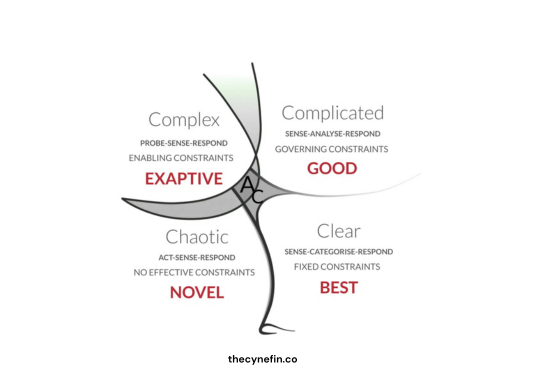
The Cynefin Framework: A Sense-Making Tool for Product Leaders

You've seen it happen. A team that nails predictable work completely falls apart when facing something unprecedented. Or a leader who excels at crisis management tries to apply that same urgency to stable operations and creates chaos. The problem isn't capability. It's context blindness. Most leaders treat all problems as if they require the same approach.…

Comments Off on The Cynefin Framework: A Sense-Making Tool for Product Leaders

Five Whys Root Cause Analysis: Stop Solving the Wrong Problems

When someone on your team raises an issue, what they're describing is almost never the actual problem. It's a symptom. The bug report, the missed deadline, the customer complaint are all surface-level indicators of something deeper. The Five Whys root cause analysis technique gives you a structured framework to move past these symptoms and find the…

Comments Off on Five Whys Root Cause Analysis: Stop Solving the Wrong Problems

How Product Leaders Negotiate with Stakeholders Using the Harvard Negotiation Method

Every product decision involves negotiation. You negotiate with engineering about timelines, with stakeholders about priorities, with customers about requirements, and with your team about trade-offs. Most product leaders approach these conversations as battles to win. That's why they fail. The Harvard Negotiation Method offers a better approach. "Getting to Yes" by Roger Fisher and William Ury…

Comments Off on How Product Leaders Negotiate with Stakeholders Using the Harvard Negotiation Method

How to Write a Product Positioning Statement: Template and Examples

Most product teams cannot clearly explain what makes their product different. Sales conversations require too much explanation. Marketing messages fail to resonate. Executives, product managers, and sales directors describe the value proposition differently when asked. The root cause is unclear positioning. Geoffrey Moore's positioning statement template from "Crossing the Chasm" solves this problem by forcing you…

Comments Off on How to Write a Product Positioning Statement: Template and Examples

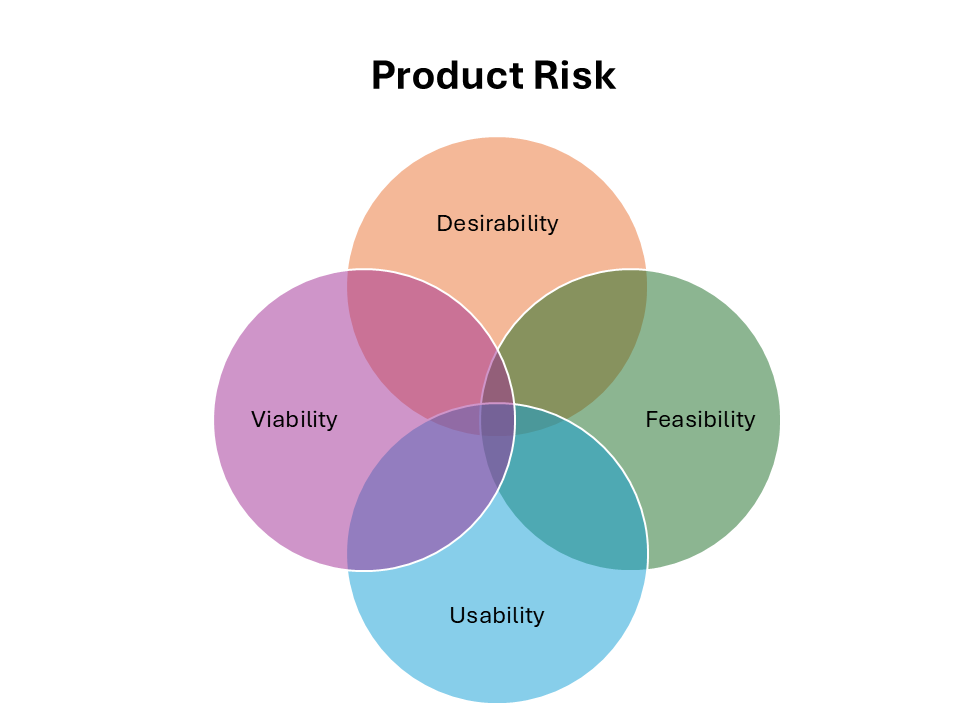
Product Risk Management: The 4 Types Every Product Manager Must Master

Product management is risk management. While most product managers focus on building features users want, success requires navigating four distinct risk types that can derail even promising ideas: desirability, feasibility, usability, and viability risks. Understanding how to identify, validate, and manage these product development risks separates successful products from expensive failures. Desirability Risk: Validating Customer Demand…

Comments Off on Product Risk Management: The 4 Types Every Product Manager Must Master

20 Agile Retrospective Formats to Transform Your Team’s Performance

Repeating the same retrospective format Sprint after Sprint drains engagement and reduces the value of your team meetings. After facilitating hundreds of agile retrospectives, I've identified how format variety surfaces different insights, keeps teams engaged, and prevents retrospectives from becoming checkbox exercises. These 20 retrospective techniques follow the five-phase process that makes retrospectives effective: set the…

Comments Off on 20 Agile Retrospective Formats to Transform Your Team’s Performance

2025 Agile DC

On October 27, 2025, Fadi Stephan and Stephen Ritchie attended the Agile DC Conference in Washington DC and presented Back to the Future – A look back at Agile Engineering Practices and their Future with AI. Below are some of the resources mentioned in the talk: Presentation slides: Back To The Future - A Look Back…

Comments Off on 2025 Agile DC

How to Run Effective Retrospectives: A 5-Phase Framework That Works

Retrospectives produce minimal results when teams approach them as checkbox meetings instead of structured improvement sessions. After facilitating hundreds of retrospectives across product and engineering teams, the distinction between productive retrospectives and time-wasters comes down to process discipline, not team dynamics. Every successful retrospective follows the same five-phase structure. These phases function like a building's foundation.…

Comments Off on How to Run Effective Retrospectives: A 5-Phase Framework That Works

Test-Driven Development for AI Code Generation: Why TDD Matters More Than Ever

AI coding tools promise unprecedented speed: prompt for a feature, receive complete implementations in minutes, ship faster than ever. The speed is compelling. Why spend hours writing a feature when AI can draft it in minutes? Because speed without validation creates more problems than it solves. The Hidden Cost of AI-Generated Code You prompt AI to…

Comments Off on Test-Driven Development for AI Code Generation: Why TDD Matters More Than Ever

Business Model Canvas: A Strategic Framework for Product Managers

Business Model Canvas: A Strategic Framework for Product Managers You're proposing a new product line that requires subscription pricing instead of one-time purchases. The CFO asks how this affects revenue predictability. The CMO wants to know if it changes customer acquisition costs and strategies. The CTO questions whether you need different billing and metering systems. Each…

Comments Off on Business Model Canvas: A Strategic Framework for Product Managers

The Product Manager’s Guide to Technical Debt: Understanding and Managing Code Quality

As a product manager, you've probably heard your engineering team mention "technical debt" during sprint planning or retrospectives. Maybe they've pushed back on a feature request, citing the need to "pay down technical debt first." Or perhaps you've noticed that what used to take two weeks now takes six, and when you ask why, the answer…

Comments Off on The Product Manager’s Guide to Technical Debt: Understanding and Managing Code Quality

Back to the Future – A look back at Agile Engineering Practices and their Future with AI Presentation

Abstract: AI is reshaping how teams build software, but what does it mean for Agile principles? Specifically, "Continuous attention to technical excellence and good design enhances agility". That was the case in 2001. Is this still true in 2025 and in the age of AI? If AI is generating the code, do we care if the code…

Comments Off on Back to the Future – A look back at Agile Engineering Practices and their Future with AI Presentation

Agile Engineering Practices in the Age of AI: What Still Matters in 2025?

Discover how AI transforms agile engineering practices like TDD, pair programming, and CI/CD in 2025. Learn which practices still matter and how developers adapt to AI-assisted development. In 2001, seventeen software industry leaders gathered at a ski resort in Utah to address their frustrations with software development. This was before smartphones, before cloud computing, and long…

Comments Off on Agile Engineering Practices in the Age of AI: What Still Matters in 2025?

Decision-Making Techniques for Facilitators: 9 Methods to Drive Group Consensus

Practical tools for turning discussion into decisions Getting a group to actually make a decision is harder than it looks. You've probably sat through meetings where discussion circles endlessly, a few loud voices dominate, or the team defaults to whatever the senior person suggests just to move on. The problem isn't that people don't care. It's…

Comments Off on Decision-Making Techniques for Facilitators: 9 Methods to Drive Group Consensus