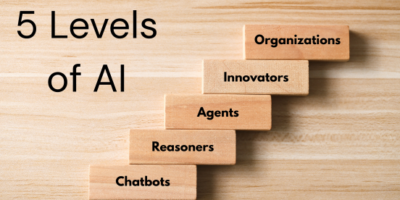
The AI powering your credit card fraud detection, the AI drafting your team’s content, and the AI researchers are working toward next represent fundamentally different levels of capability. Where a given system sits on that progression changes how you deploy it, what you invest in, and what you should realistically expect from it.
Narrow AI: The AI You Already Use Every Day

Artificial Narrow Intelligence, or ANI, describes systems built to perform a specific task or a defined set of tasks. A fraud detection system evaluates millions of transactions in real time, flagging suspicious activity in milliseconds. It cannot write a summary, answer a question, or do anything outside the task it was built for. That focus is precisely what allows these systems to reach a level of speed and accuracy no human team could match.
Most of the AI you interact with today is narrow AI: the Netflix recommendation engine, voice recognition in Alexa and Siri, and the spam filters in your inbox. It is already embedded in everyday technology.
Generative AI: A Significant Leap Within Narrow AI

Generative AI sits within the narrow AI category, but it represents a meaningful capability expansion over earlier narrow AI systems. A single model like ChatGPT or Google Gemini can draft a contract, explain a technical concept, summarize a research paper, and write functional software.
The distinction matters for how organizations deploy it. Earlier narrow AI required you to identify a specific, well-defined task and build or acquire a system for it. Generative AI is more flexible. The practical question shifts from “what task can this system do?” to “where does this system’s output require experienced human review, and where is it reliable enough to act on?”
AGI: The Capability Researchers Are Working Toward
Artificial General Intelligence, or AGI, does not exist yet. It refers to a system that can learn, reason, and apply intelligence across any domain, the way a human can draw on experience from one context and apply it to an entirely unfamiliar one, without being retrained for each new situation.
Every AI system today, including the most advanced generative models, operates within boundaries set during training. AGI would not need a human to define the task. It would figure that out on its own.
How close is it? Researchers and AI lab leaders disagree sharply. Some believe AGI is within a few years. Others, including prominent researchers like Yann LeCun at Meta, argue the current path of large language models does not lead there at all, and that fundamental architectural breakthroughs would be required.
What is clear is that AGI, if it arrives, would not be an incremental step forward from generative AI. It would change the nature of what AI can do, with significant consequences for how organizations are structured, how decisions get made, and what kinds of work remain distinctly human.