AI Metrics Glossary for Product Managers

AI products are measured differently from the products you've managed before. This glossary covers the metrics you need to evaluate performance, spot problems, and make decisions with your team. Not every metric applies to every product. Use this as a reference for the terms you encounter, not a list of everything you need to track. Many…

Comments Off on AI Metrics Glossary for Product Managers

How to Turn User Pain Points into AI Use Cases Worth Building

Building AI into a product is easy to get excited about and hard to get right. Most teams either start with the technology and work backward to find a use for it, or they identify real problems but generate ideas without any grounding in what AI can actually do today. Neither produces a roadmap worth building.…

Comments Off on How to Turn User Pain Points into AI Use Cases Worth Building

Five Questions to Evaluate Whether a Pain Point Is Worth Solving

The previous post in this series ends with a prioritized list of pain points your team has aligned on. What it does not tell you is whether those pain points are worth solving. These five questions give you a consistent way to stress-test any pain point before you commit resources to it. 1. Magnitude: How many…

Comments Off on Five Questions to Evaluate Whether a Pain Point Is Worth Solving

5 Steps to Mapping the User Experience to Identify AI Opportunities

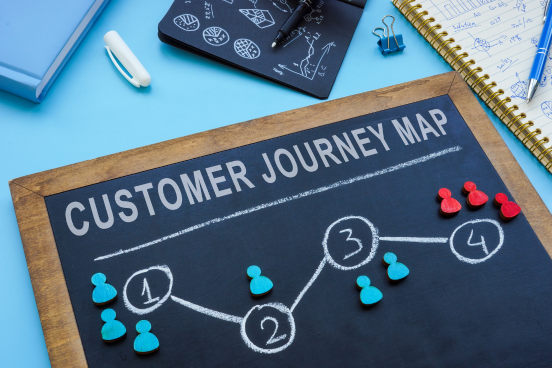
Before you decide what to build with AI, you need to understand where it will actually make a difference. User experience mapping gives your team a picture of the user's existing reality: what they do today, where they hit friction, and which problems are worth solving. The output is a prioritized set of pain points your…

Comments Off on 5 Steps to Mapping the User Experience to Identify AI Opportunities

Pricing AI Products on Value, Not Compute

The cost of running an AI model is easy to measure. It shows up in cloud bills, API invoices, and unit economics spreadsheets, and that visibility makes it a natural anchor for pricing decisions. It shouldn't be. The Floor and the Ceiling For any AI product, you're working between two numbers. The floor is your full…

Comments Off on Pricing AI Products on Value, Not Compute

User Research for AI Products Requires Different Questions

AI products introduce a layer of complexity that standard discovery methods are not designed to handle. The system makes probabilistic decisions. It will be wrong sometimes. Users will have emotional reactions to those mistakes that they cannot accurately predict. And what users tell you they will do when confronted with a faulty output is rarely what…

Comments Off on User Research for AI Products Requires Different Questions

How to Build an AI Strategy Around What Only You Have

Most organizations are now using AI in some capacity. That alone tells you something important: access to AI tools is not a competitive advantage. Everyone can call the same APIs and run the same models. The organizations actually getting value from AI are not winning because they found a better tool. They are winning because they…

Comments Off on How to Build an AI Strategy Around What Only You Have

Building AI Features: A Product Manager’s Guide to the Machine Learning Workflow

AI features are now standard product work. Recommendation engines, fraud detection, content moderation, and intelligent search ship on the same schedule, with the same stakeholder expectations, and under the same PM ownership as any other feature. What is different is how you build them. The lifecycle that follows covers eight steps. They build on each other,…

Comments Off on Building AI Features: A Product Manager’s Guide to the Machine Learning Workflow

A Product Leader’s Guide to AI Capabilities

Artificial intelligence is no longer a single thing. It's a collection of distinct capabilities, each solving a different class of problem. That distinction matters for product leaders. Knowing what each capability does, and what it can't do on its own, is what allows you to move from "we should use AI" to a clear answer about…

Comments Off on A Product Leader’s Guide to AI Capabilities

What the SCARF Model Reveals About Human Reaction to Change

Anyone who has led organizational change has seen a predictable pattern. The change is introduced. Resistance follows. Performance drops. Teams struggle through uncertainty before things stabilize at a new normal, if they get there at all. The initiative is sound. The case for change is clear. And yet people resist and what looked straightforward on paper…

Comments Off on What the SCARF Model Reveals About Human Reaction to Change

Supervised Learning: How Machines Learn from Examples

Supervised learning is the branch of machine learning behind spam filters, fraud detection systems, medical imaging tools, and large language models like ChatGPT. Understanding how it works, and where it reaches its limits, matters for anyone making decisions about building or buying AI-powered products. What Supervised Learning Actually Is Supervised learning is a method where a…

Comments Off on Supervised Learning: How Machines Learn from Examples

Incremental Product Funding: How Validated Learning Protects Your Product Investment

Every product investment starts with something the organization believes in. The budget gets approved, the team gets staffed, and the work begins. Then the product launches and falls flat. The postmortem reveals that customers didn't need it, didn't want it, or weren't willing to pay for it. The budget is gone, and the organization is left…

Comments Off on Incremental Product Funding: How Validated Learning Protects Your Product Investment

Machine Learning: The Engine Behind Modern AI

Product leaders today operate in a field shaped by AI. This is the first in a series of posts that maps that field, starting with the foundational concepts: what AI is, how machine learning works, and what distinguishes the main approaches in use today. AI vs. Machine Learning Artificial intelligence refers to systems that can perform…

Comments Off on Machine Learning: The Engine Behind Modern AI

How to Manage Stakeholders Using the Power Interest Matrix

Stakeholder management takes real time. The bigger the initiative, the longer the list of people who have a stake in the outcome. Most teams respond by treating everyone roughly the same: the same email, the same update cadence, the same level of access. That is where the time goes. The power/interest matrix, developed by Aubrey Mendelow…

Comments Off on How to Manage Stakeholders Using the Power Interest Matrix

2026 Global Scrum Gathering

On May 5, 2026, Fadi Stephan and Stephen Ritchie attended the Global Scrum Gathering in Vancouver, Canada, and presented The Impact of AI on Agile Engineering Practices. Below are some of the resources mentioned in the talk: Abstract AI and vibe coding is reshaping how teams build software, but what about our Agile principles and practices?…

Comments Off on 2026 Global Scrum Gathering