Read more about the article What is The Testing Pyramid?
Agile Testing Pyramid

What is The Testing Pyramid?

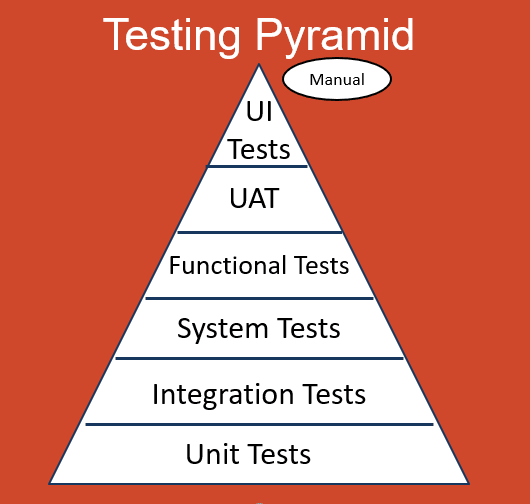
Most teams today use an inverted pyramid where most of the tests are manual User Acceptance Tests and System tests and are manually executed via the UI. Unit tests are non-existent or are too few to be beneficial. In order to have a maintainable test suite, as explained in this post, the base of our pyramid…

Comments Off on What is The Testing Pyramid?
Read more about the article How Many Tests Are Enough?
How Many Tests Are Enough?

How Many Tests Are Enough?

When trying to decide how to distribute our testing efforts and how many tests to write for each different type, it’s important to consider: Test coverage: How much of the code has a test that verifies its behaviorTest execution time: How long does it take to run the test and get a result backTest feedback: How…

Comments Off on How Many Tests Are Enough?
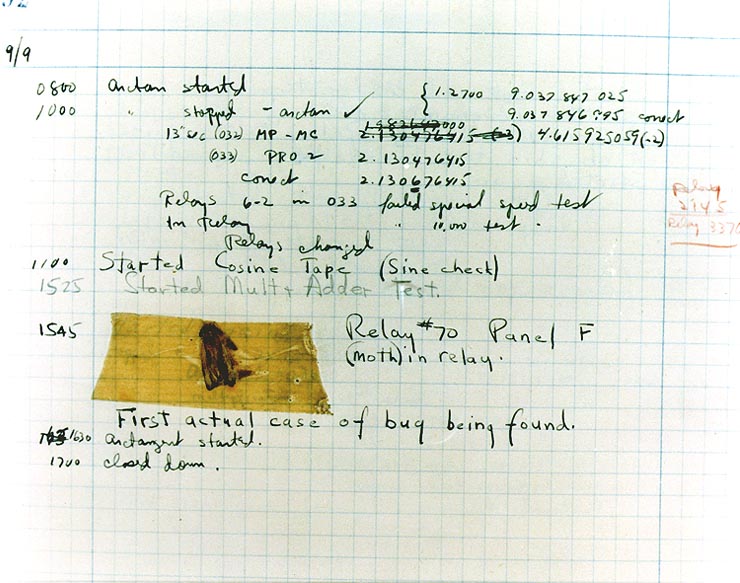
Read more about the article What is a Bug? Here is the First Software Bug Ever Reported
A page from the Harvard Mark II electromechanical computer’s log, featuring a dead moth that was removed from the device. https://commons.wikimedia.org/w/index.php?curid=165211

What is a Bug? Here is the First Software Bug Ever Reported

Merriam-Webster defines the word bug as "an unexpected defect, fault, flaw, or imperfection." In 1946, the 1st ever case of a software bug was reported in an early electro-mechanical computer called the Mark II. An actual moth got trapped in the computer relay and caused it to malfunction. The moth was removed and taped into a…

Comments Off on What is a Bug? Here is the First Software Bug Ever Reported
Read more about the article Which Tests Should We Automate?
Which Tests Can We Automate?

Which Tests Should We Automate?

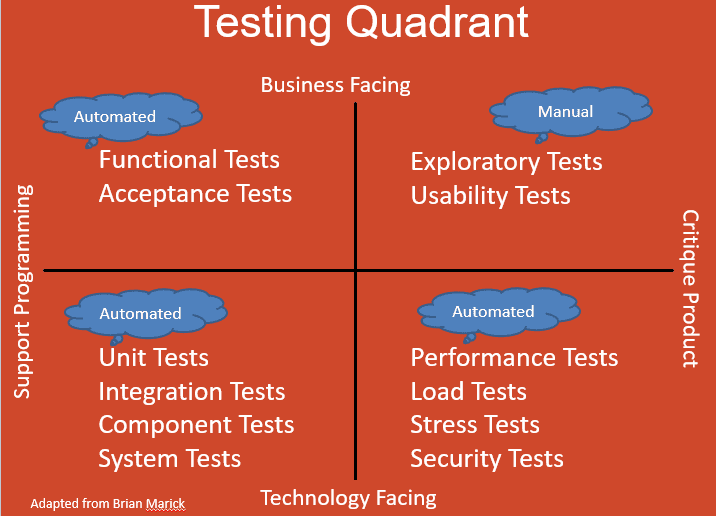
When we look at the different types of tests and the Agile Testing Quadrant, which tests in which quadrant can we automate? In general, any tests that can be scripted can and should be automated. If we can map out a series of preparatory steps, followed by an action that results in an expected value or…

Comments Off on Which Tests Should We Automate?
Read more about the article What is The Agile Testing Quadrant?
The Agile Testing Quadrant

What is The Agile Testing Quadrant?

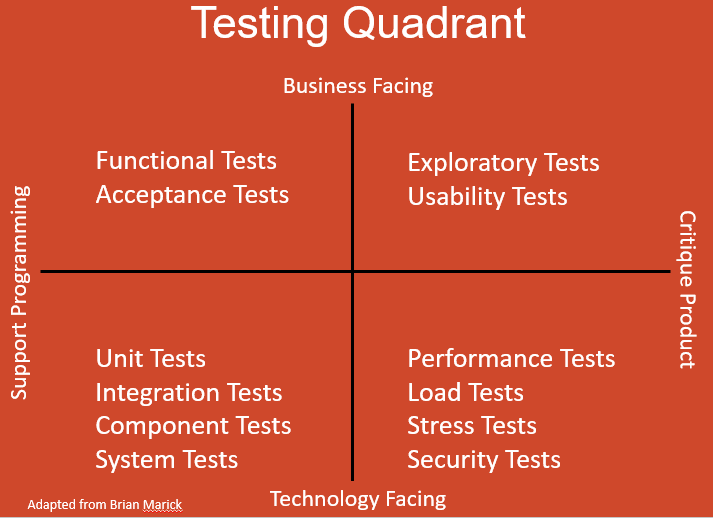
Brian Marick came up with a way to categorize the different types by 2 dimensions: Tests that support programming or the team and tests that critique the productTests that are technology facing and tests that are business facing Test that support the team: These are tests that help the team build and change the application with…

Comments Off on What is The Agile Testing Quadrant?
Read more about the article What are the Different Types of Tests?
Types of Tests

What are the Different Types of Tests?

Test definitions vary. Sometimes they are categorized by type, level and approach. Below is my take on the different types of testing. Unit Testing: Verifies that a single unit of code (a specific behavior in a method) behaves as intended. Integration Testing: Verifies that two or more units communicating with each other behave as intended. Component…

Comments Off on What are the Different Types of Tests?

The Most Common Misunderstanding of Agile Software Development

Beyond Iterative Coding Many software teams think they're "doing Agile" when they're really just breaking down their coding phase into smaller chunks. This fundamental misconception might be holding your team back from achieving true agility and delivering real business value. The Misconception: "Agile Is Just Iterative Development" I've visited dozens of organizations that proudly claim to…

Comments Off on The Most Common Misunderstanding of Agile Software Development

4 Typical Transitions Teams Go Through When They First Start Adopting Scrum

Over many consulting engagements, I’ve come to see 4 stages that organizations and teams go through as they try to learn and implement Scrum on their own. Typically, these engagements start when an organization reaches out asking for help as they are not seeing the benefits they expected after adopting Scrum. I usually find the organization…

Comments Off on 4 Typical Transitions Teams Go Through When They First Start Adopting Scrum

Technical Debt Series – 5 Ways Scrum Teams Manage Technical Debt

In my previous post, I talked about establishing a debt payment plan. On a Scrum team, there are several approaches a team can take to pay down the debt. Debt Limit Trigger – Whenever our debt limit is reached, the team focuses the next Sprint on technical debt reduction (better than nothing).Release Trigger - After every…

Comments Off on Technical Debt Series – 5 Ways Scrum Teams Manage Technical Debt

Technical Debt Series – The 6 Step Technical Debt Management Plan

In the previous blog, we looked at how when we don’t actively manage our debt, it can lead to a vicious cycle we can’t get out of. We want to make prudent and deliberate decision on debt and have a plan to service the debt and make our payments. So to do that, we need a…

Comments Off on Technical Debt Series – The 6 Step Technical Debt Management Plan

Technical Debt Series – The Vicious Cycle of Technical Debt

In my previous post, we looked at the difference between good technical debt and bad technical debt and highlighted the importance of keeping our debt low. Unfortunately, the typical scenario that most teams face is that they eventually reach a point where their output is lower then what it used to be. Instead of stopping and…

Comments Off on Technical Debt Series – The Vicious Cycle of Technical Debt

Technical Debt Series – Good Technical Debt vs. Bad Technical Debt

In my previous post, we defined technical debt and saw how not all technical debt is bad. Just like in the financial world, some type of debt is considered ok as long as it is paid back. Consider a house loan or a car loan for example. Those are generally considered acceptable types of debt in…

Comments Off on Technical Debt Series – Good Technical Debt vs. Bad Technical Debt

Technical Debt Series – What is Technical Debt?

In my previous posts we looked at symptoms of bad code and reasons we write bad code. And bad code leads to technical debt. The Technical Debt Metaphor Ward Cunningham introduced the Technical Debt metaphor by stating: “Shipping first time code is like going into debt. A little debt speeds development so long as it is…

Comments Off on Technical Debt Series – What is Technical Debt?

Technical Debt Series – Top 5 Reasons for Writing Bad Code

In my previous post, I discussed symptoms of bad code. Here I’m going to look into some of the reasons we end up writing bad code: Top 5 Reasons For Writing Bad Code 1. Deadlines You’ll hear excuses like we have a deadline to meet so we don’t have time to test or to make the…

Comments Off on Technical Debt Series – Top 5 Reasons for Writing Bad Code

Technical Debt Series – Top 4 Symptoms of Bad Code

Bad code tends to creep up on us over and over again. We’ve all been there. We kick off a project, things start a little slow, but then things quickly pick up and a lot of features are getting developed and delivered. We have an excited team and a happy customer. However, soon things start to…

Comments Off on Technical Debt Series – Top 4 Symptoms of Bad Code